
Learning German as a Migrant: How to Do It Faster
You live in Germany and want to learn German quickly – for work, everyday life, the integration course, or an official exam like the DTZ or telc B1. But where do you start? Which methods really work?
In this article, we show you the best methods and digital helpers – so you learn faster and reach your goal.
Why German skills are so important
As a migrant in Germany, you need German for almost everything: doctor visits, dealing with authorities, work, and talking with neighbors. Good German skills open doors for you – literally.
Specifically, you need German for:
- The settlement permit – at least level B1
- Naturalization – official language certificate required
- Better job opportunities and higher salary
- Independence in everyday life without foreign help
The 5 best methods for learning German
1. The integration course – your foundation
The integration course is free (or very cheap) and takes you from A1 to B1. At the end comes the DTZ. If you are not yet attending a course, ask BAMF or your job center.
2. Speak daily – mistakes are good too
Most learners are afraid of mistakes. But mistakes are normal – they show that you are practicing. Speak German daily: with neighbors, in the supermarket, on the phone. Every conversation is training.
3. Media mix – listen, read, write German
Use different sources:
- Listening: Deutsche Welle Podcast (Extra Deutsch), NDR radio
- Reading: Nachrichtenleicht (nachrichtenleicht.de) – simple German
- Writing: Write short messages in German – e.g. WhatsApp in German
- Watching: German series with subtitles (e.g. on ARD Mediathek)
4. Spaced repetition – really remember vocabulary
The principle: You repeat a word exactly when you have almost forgotten it. This is much more effective than reading once. Apps like Anki use this principle.
Learn 10–15 new words daily with example sentences.
5. Exam-oriented learning
If you have to take an official exam (DTZ, telc B1, Goethe B1), learn exam-oriented. That means: practice the exact format of the exam.
- Write letters with 4 key points
- Practice listening comprehension with multiple-choice
- Train speaking with typical topics
Digital helpers: apps and platforms compared
Tip: practise what you've just read with interactive exercises — it sticks better.
Start B1 exercises →| App / Platform | Good for | Exam focus? |
|---|---|---|
| Duolingo | Everyday vocabulary, beginner | ❌ No |
| Babbel | Grammar, conversations | ❌ No |
| Deutsche Welle | Listening, reading, grammar | ⚡ Partly |
| Anki | Vocabulary, spaced repetition | ⚡ Partly |
| DeutschMeister | DTZ/telc B1 exam preparation | ✅ Yes – complete |
General learning apps like Duolingo are good for beginners. But for an official exam, you need a tool that trains exactly the exam format. For this, there are specialized platforms.
Example: A weekly learning plan for working people
- Monday: 20 min listening – podcast or exercise
- Tuesday: 20 min reading – advertisement or newspaper article
- Wednesday: 25 min writing – practice a short letter
- Thursday: 20 min speaking – read aloud or language partner
- Friday: 20 min vocabulary – review new words
- Saturday: 45 min – practice test (all four parts)
- Sunday: Rest – or watch a German video
Typical mistakes when learning German
- Learning only from books – without real speaking this does not work.
- No fixed learning goal – without a goal motivation is missing.
- Too many apps at once – better to use one app consistently.
- Not training for the exam – exam format is crucial.
- Only speaking your mother tongue among each other – use every chance to speak German.
Frequently asked questions (FAQ)
How long does it take to get from A1 to B1?
That depends on how much you practice. With an integration course (600–900 lessons) and regular self-study, you can do it in 12–18 months.
Is Duolingo good enough for the DTZ?
Duolingo helps with vocabulary learning, but it does not prepare you directly for the DTZ. You need exam-specific training.
Can I learn German without a course?
Yes – with online materials, apps, and language partners, it is possible without a course. But an integration course is structured and often free.
Which German exam do I need for naturalization?
You need proof at level B1. The DTZ certificate (B1), telc B1, or Goethe-Institut B1 are recognized.
Conclusion
Learning German takes time and regularity. With the right method – course, daily practice, digital tools, and exam-oriented training – you make quick progress.
The most important thing: Start today and practice a little every day.
You have already achieved a lot – the step to Germany. Now German is your next step.
👉 Do you want to pass the exam confidently?
deutsch-meister-app.com is the platform especially for migrants in Germany. Train all four DTZ modules, AI feedback for letters, speaking exercises, and a personalized learning plan.
Ready for B1 exercises?
Don't just read — practice now! Hundreds of interactive exercises, audio tasks and exam training are waiting for you.
War dieser Artikel hilfreich?
Ähnliche Artikel

The difference between A2 and B1: What really changes — and how I made the leap.
What is really the difference between A2 and B1 in German? A personal experience report with 3 surprising facts, 5 tips — and an encouraging conclusion.
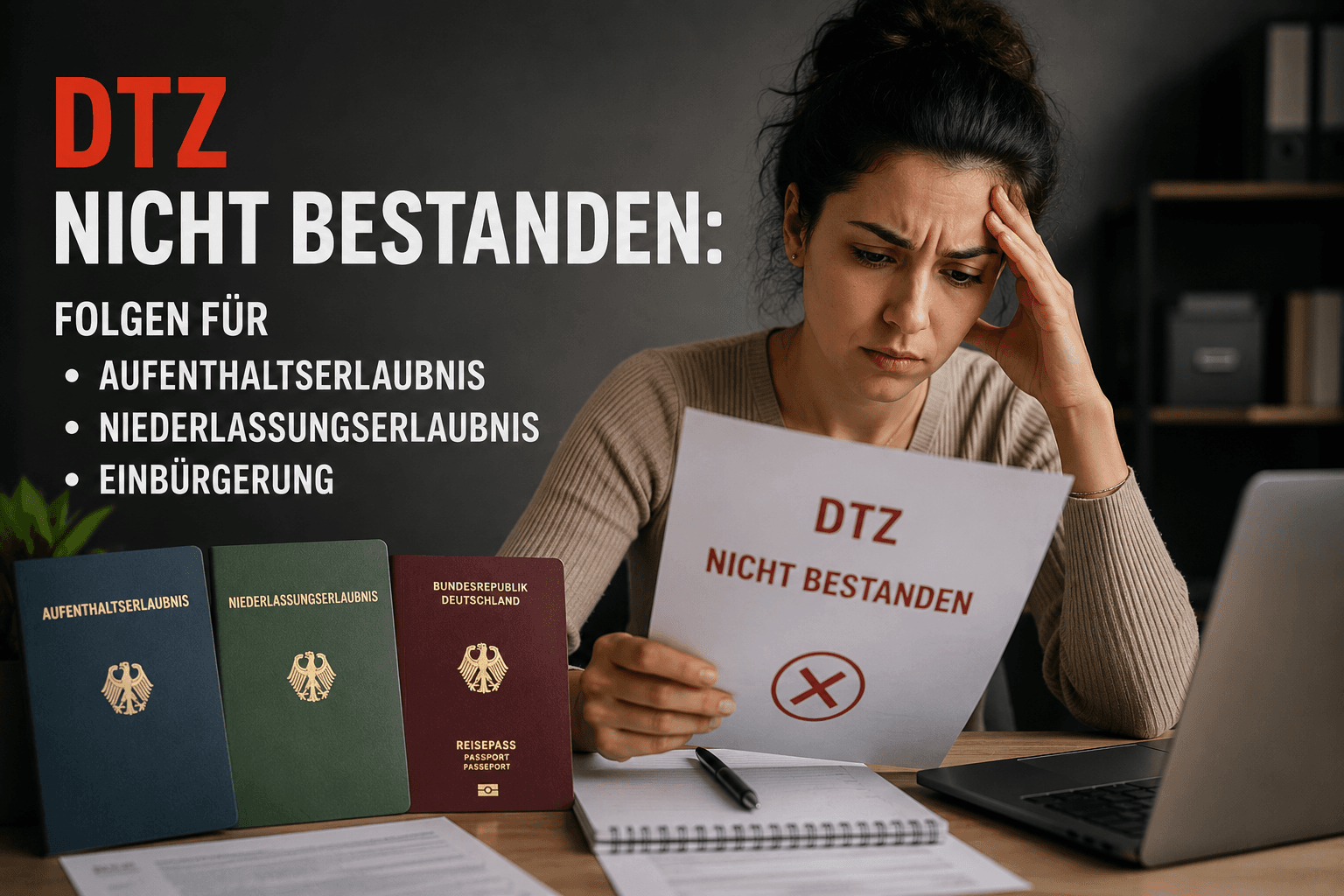
DTZ not passed: Consequences for residence permit, settlement permit, and naturalization
What really happens if you fail the DTZ? Consequences for residence permit, settlement permit, and naturalization — clearly explained with the current status in 2025.
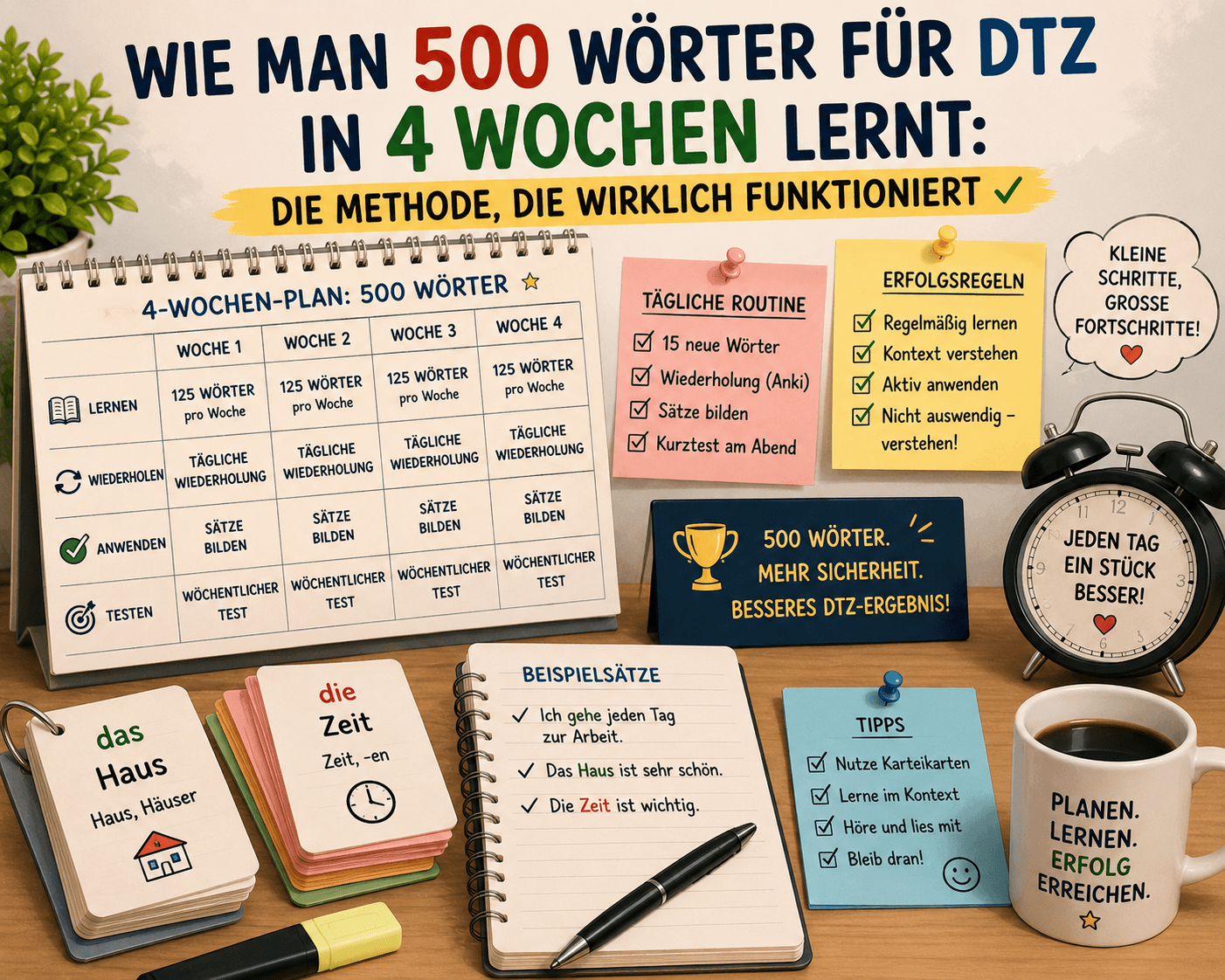
500 DTZ vocabulary in 4 weeks: Spaced Repetition Method with weekly plan
Which 500 words actually appear in the DTZ, how to confidently learn them with Anki in 4 weeks, and why most traditional methods fail — with a concrete daily plan.